
How is Procedural Generation Done?
Procedural generation is all about creating content automatically with rules and logic. Traditionally, it's been seen as a way of using step-by-step procedures that always produce the same results from the same inputs.

Algorithms
An algorithm is like a recipe for computers, providing step-by-step instructions to get a result. In procedural generation, algorithms automatically create landscapes, cities, structures, and more.

Randomness and Control
Algorithms use controlled randomness, so every run feels unique but still follows logical rules. This makes them efficient for building vast, complex environments.

Noise
A key tool for algorithms is noise, a random pattern that adds variety. It's what transforms flat terrain into rolling hills, mountains, or lakes.
Commonly Used Noise and Algorithms
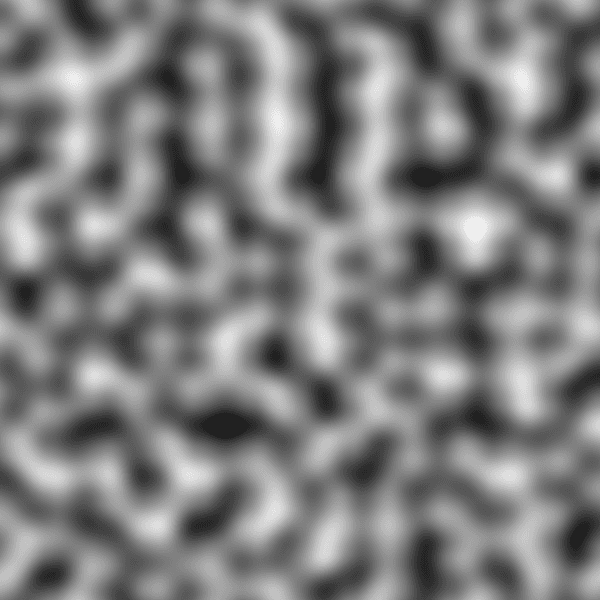
Perlin Noise
Invented by Ken Perlin, this gradient noise function is used for creating naturally appearing textures on computer-generated surfaces. It's widely used for creating landscapes, clouds, and textures.
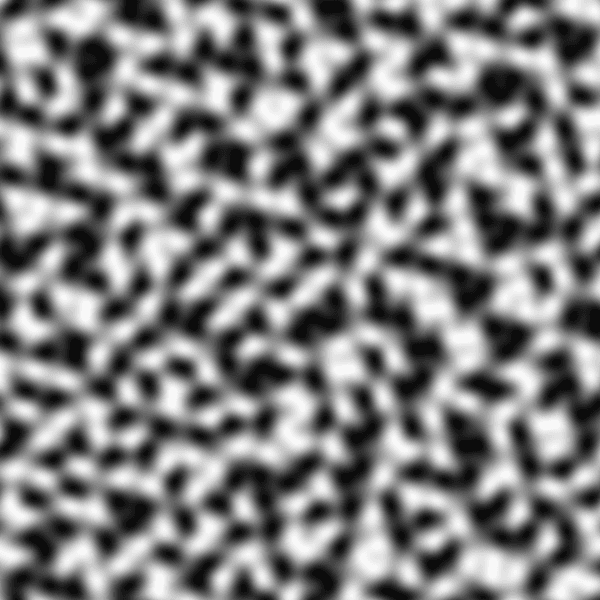
Simplex Noise
An improvement over Perlin noise, created by Ken Perlin himself, Simplex noise is computationally more efficient and has fewer directional artifacts. It is used in similar applications as Perlin noise, but is more suitable for higher-dimensional spaces.
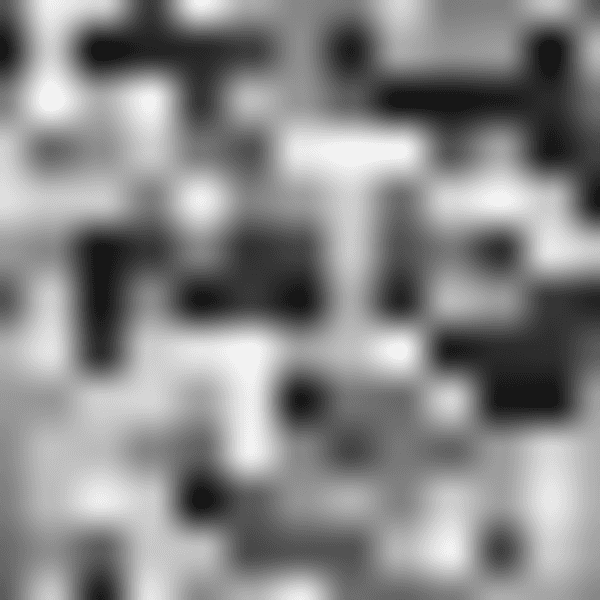
Value Noise
This type of noise is generated by dividing the space into a grid and assigning random values at each grid intersection, then interpolating between these values. It's simpler than Perlin noise and often used for creating textures.
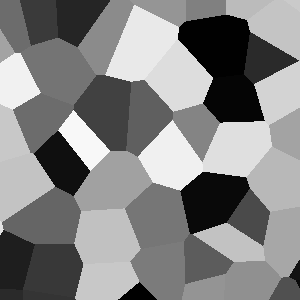
Worley Noise (Cellular Noise)
This noise algorithm generates a cellular pattern. It divides space into a Voronoi diagram and is often used for textures that resemble stones, cells, and other organic materials.
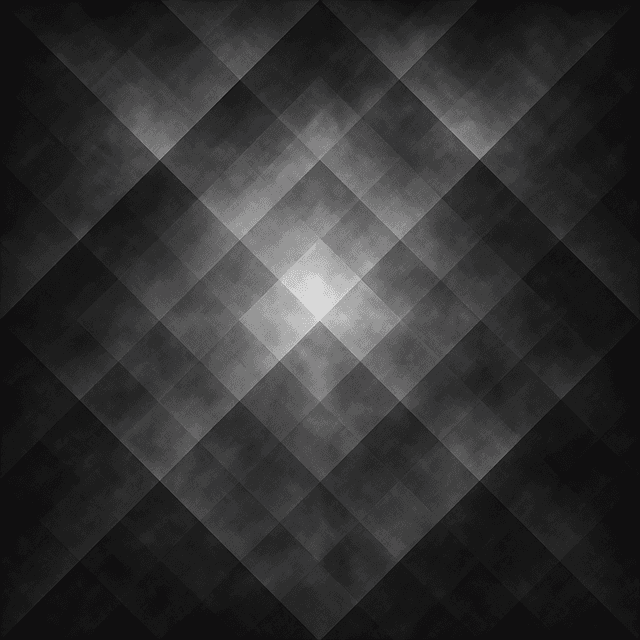
Diamond-Square Algorithm
Used primarily for terrain generation, this algorithm works by dividing a space into squares and diamonds recursively, creating a fractal-like pattern that resembles natural terrains.
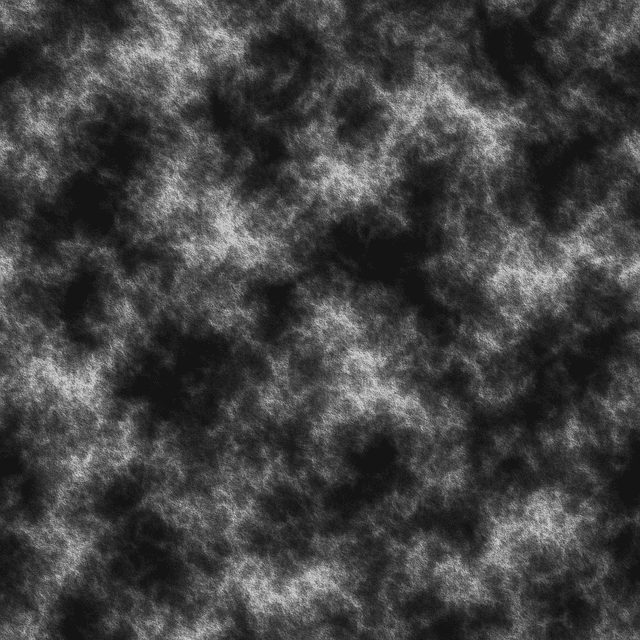
Fractal Noise (Fractional Brownian Motion)
This noise is generated by combining multiple layers of Perlin or Simplex noise at different frequencies and amplitudes. It's commonly used for creating realistic terrain, clouds, and other natural phenomena.
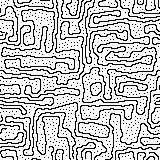
Model Synthesis (Wave Function Collapse)
Inspired by principles of quantum mechanics, Model Synthesis (MS) is a constraint-based algorithm used for procedural generation. Instead of building content randomly, MS works by narrowing down possibilities step by step, like collapsing a 'wave function' into a valid state. It analyzes input patterns, then generates outputs that follow the same local rules, ensuring coherent and aesthetically consistent results. MS is widely used for generating tile-based maps, levels, and textures, where preserving adjacency rules (e.g., walls next to floors, roads connected correctly) is essential. This makes it especially useful for games and applications that require structured, puzzle-like layouts.
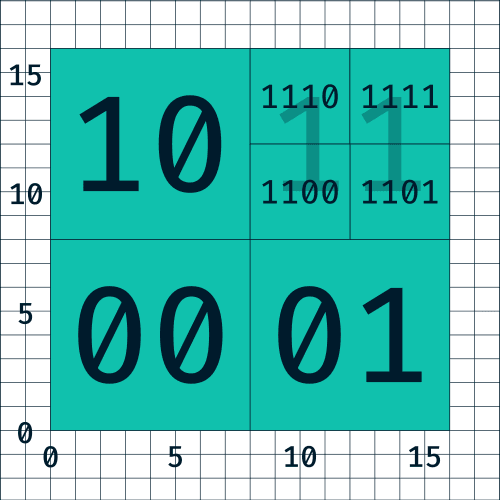
Binary Space Partitioning (BSP) Trees
This method recursively divides an area into sub-sections, places rooms, and connects them with corridors. Think of it as the responsible adult of dungeon algorithms: structured, reliable, and guaranteed to avoid overlapping rooms.
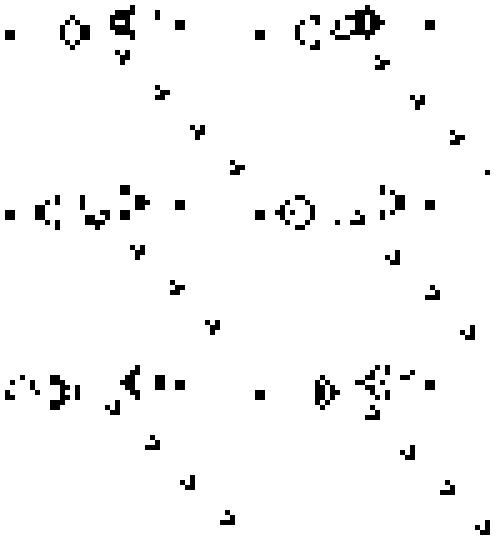
Cellular Automata (CA)
Imagine a grid of cells, each following a few simple rules based on its neighbors. Start with random noise, hit 'go,' and watch it evolve into either an intricate cavern system or a solid, impenetrable wall. It's a bottom-up, emergent approach that's especially good for natural cave systems.

L-Systems (Lindenmayer Systems)
Invented by a biologist to model plant growth, L-Systems use recursive rules to generate branching structures. Beyond trees and ferns, they're surprisingly versatile for rivers, roads, and even city maps.
Logic and Math
Procedural generation runs on two powerful partners: math and logic.
Math handles the building blocks: random numbers, noise functions, spatial calculations, and probability. This gives us endless variation that looks natural—like rolling hills, branching rivers, or balanced enemy encounters.
Logic applies the rules: rivers flow downhill, enemies scale with your level, trees don't overlap. Logic makes sure everything fits together and feels right.
Together, math creates the possibilities and logic keeps them coherent. This balance lets developers build forests, dungeons, and even storylines that feel alive, dynamic, and intentional—all from a few smart rules.
Simulation
Simulations use math and logic to model real-world systems, behaviors, or phenomena in a virtual environment. Math provides the formulas and calculations needed for things like movement, physics, probability, and statistics, ensuring the simulated world follows the appropriate rules of nature or designed systems. For example, math handles how fast objects move, how forces interact, or how populations grow over time.
Logic adds the decision-making and conditional rules that guide how entities behave or respond to changes.
This includes things like AI decision trees, event triggers, or "if/then" statements that determine how the simulation adapts to new situations. Together, math creates the quantitative backbone, while logic governs the flow and interactions, making simulations both realistic and responsive to user input or dynamic events.
Simulations and procedural generation often go hand in hand, especially in interactive worlds and systems. Simulations model the behavior and interactions of elements, like weather patterns, ecosystems, or crowd movements while procedural generation creates the foundational content, such as terrain, resources, or structures.
The combination allows virtual environments to not only appear unique each time, but also to feel alive and responsive.
When used together, procedural generation provides the building blocks and variety, while simulations bring those elements to life with realistic dynamics and emergent behavior. This synergy enables experiences where worlds aren't just assembled differently every time they also evolve and react in engaging, believable ways.
Algorithms
Algorithms play a crucial role in procedural generation by providing the step-by-step instructions that turn simple inputs into complex, dynamic content. They outline how to build worlds, generate levels, or create patterns, defining the sequence of actions that bring virtual environments to life. For example, an algorithm might detail how to lay out rooms in a dungeon, scatter resources across a landscape, or assemble branching storylines.
By breaking down generation processes into repeatable steps, algorithms ensure that content is created efficiently, consistently, and with endless variety. This approach allows procedural generation to produce vast, unique experiences from a compact set of instructions, making it a powerful technique in gaming, simulation, and creative tools.
Decisions
Decisions are a key element in procedural generation, shaping how content unfolds and adapts. Whether it's determining which path a player can take, selecting the type of enemy to appear, or choosing the next event in a narrative, decision-making steers the flow and variety of generated experiences. These choices can be driven by player actions, random selection, or built-in rules.
AI Models
AI models can significantly enhance procedural generation by making the content smarter and more adaptive. Instead of relying solely on fixed rules or random choices, AI can analyze patterns, learn from data, and generate content that responds intelligently to player actions or preferences. This means AI-driven procedural generation can create more believable characters, dynamic environments, or evolving challenges.
When integrated, AI models allow procedural systems to go beyond simple variety they can shape worlds and stories that adapt in real time, reflect player behavior, and continuously improve. This results in richer, more personalized experiences that feel both fresh and deeply interactive each time.